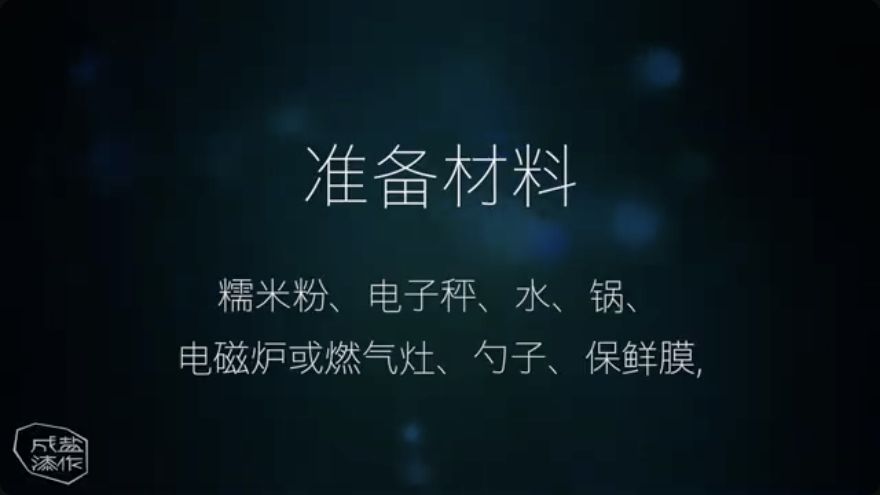
This video demonstrates the preparation of rice paste (nori-urushi base) for lacquerware cloth reinforcement (nunokise). It is useful for lacquer artisans who need to prepare their own adhesive for fabric application or clay grounds, specifically showing the cooking process using glutinous rice flour.
A walkthrough written from 成盐漆作 Lacquer ChengYan’s video ↗.
The recording is the authoritative demonstration; this page is a working guide to it.
Weigh 10 grams of glutinous rice flour using a digital scale. Measure water at a ratio of four parts water to one part flour. Place both into a small pot. While the water is cold, stir the mixture continuously until the flour is fully dispersed and no granules or dough clumps remain.
When it is rightA uniform, clump-free liquid slurry.
When it goes wrongUndissolved granules that will cause lumps in the final paste.
Place the pot on a stove and set to low heat. Warm the mixture slowly while stirring continuously. As the temperature rises, the mixture will begin to thicken. Continue stirring until the paste reaches a somewhat translucent state and the entire contents turn into a gel state.
When it is rightA thick, translucent gel.
When it goes wrongBurning or sticking to the pot if stirring stops.
Turn off the heat but continue stirring to prevent residual heat from causing the paste to stick to the pot. Allow it to cool naturally, or accelerate cooling by placing the pot in a bowl of cold water while stirring. Once cooled, cut the paste into portions suitable for use. Wrap in plastic wrap and store in the refrigerator. Let it return to room temperature before mixing with lacquer.
When it is rightSolidified paste portions that are easy to handle.
When it goes wrongPaste sticking to the pot if not stirred after heat is off.
When ready for cloth reinforcement (nunokise), mix the cooled rice paste with urushi. The general ratio is one part rice paste to one part lacquer. Some artisans use a ratio of 10 parts rice paste to 7 or 8 parts lacquer. For thin fabrics like silk, raw lacquer (ki-urushi) alone may be used without rice paste.
When it is rightA workable adhesive mixture.
When it goes wrongHigh rice paste ratio increases shrinkage and requires extended drying time.
Terminology in this video
糊漆nori-urushi
lacquer and rice-paste adhesive
布着せnunokise
cloth reinforcement over edges
生漆ki-urushi
raw unrefined lacquer
Left open
What this video does not settle.
Exact viscosity target for the gel state is described as 'translucent' but not quantified.
Specific drying time extension for high rice paste ratios is not specified.