Raden: Mother-of-Pearl Inlay
Raden (螺鈿) inlays cut, thinned shell — most often abalone or other iridescent mother-of-pearl — into the lacquer surface for a shimmer and color-shift that no pigment or metal powder can reproduce. It's an old technique with a long transmission history: it's traced to roughly 1700 BCE in ancient China, reached Tang-dynasty China (618–907 CE) via Persia's Sassanian Empire, and arrived in Japan through Nara-period diplomatic envoys returning from Tang China — surviving examples are preserved among the Shōsōin treasures. (Musubi Kiln, The Intricate Artistry of Raden)
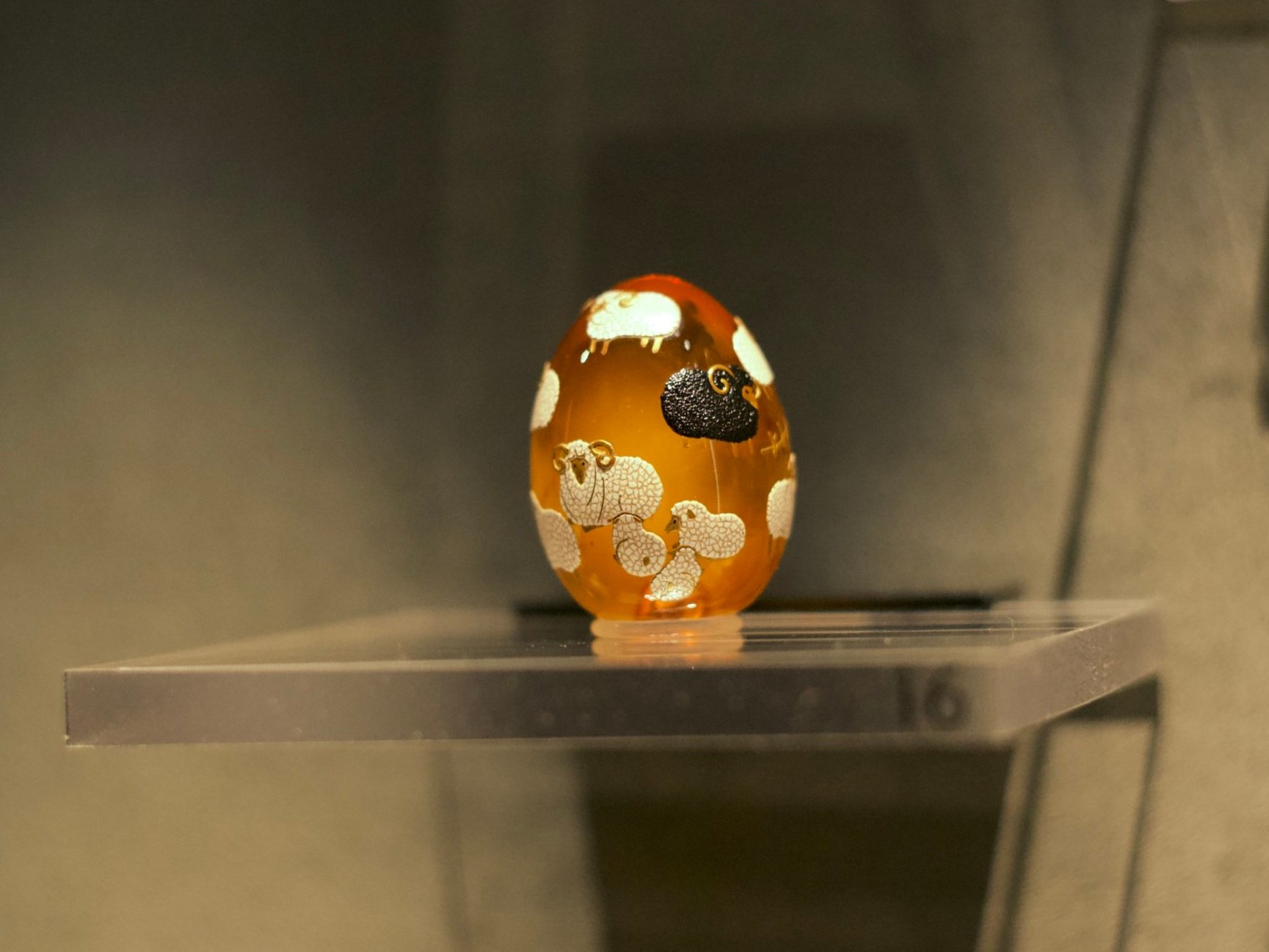
In practice, thin sheets or fragments of shell are cut to the design's shape and set into the lacquer ground, then generally overcoated and polished back — similar in spirit to togidashi maki-e's bury-and-reveal logic — so the inlay sits flush with the surrounding surface rather than proud of it. A closely related technique, rankaku (eggshell inlay), uses small fragments of quail eggshell the same way, bonded to the lacquer, overcoated, and burnished back to reveal a cracked-mosaic pattern. (Pen Boutique)

For further reading on shell selection and cutting in more depth: Britannica, Raden; Kogei Standard, Mother-of-Pearl Inlay; Urushi Stefos, Raden.