This video documents a comparative stress test of 16 different filler powders mixed with raw lacquer (ki-urushi) on oak boards. It is useful for lacquer artisans evaluating the durability, sanding characteristics, and environmental stability of various traditional and modern ground materials under UV, freezing, and water immersion conditions.
A walkthrough written from 成盐漆作 Lacquer ChengYan’s video ↗.
The recording is the authoritative demonstration; this page is a working guide to it.
Raw urushi (ki-urushi) can cause serious delayed skin reactions. Handle with care and avoid prolonged skin contact.
Read Safety First before working with raw urushi.
Tools shown
microscope— 500x and 1000x magnification for particle analysis
UV detector— measured intensity over 3100 micro-watts/cm²
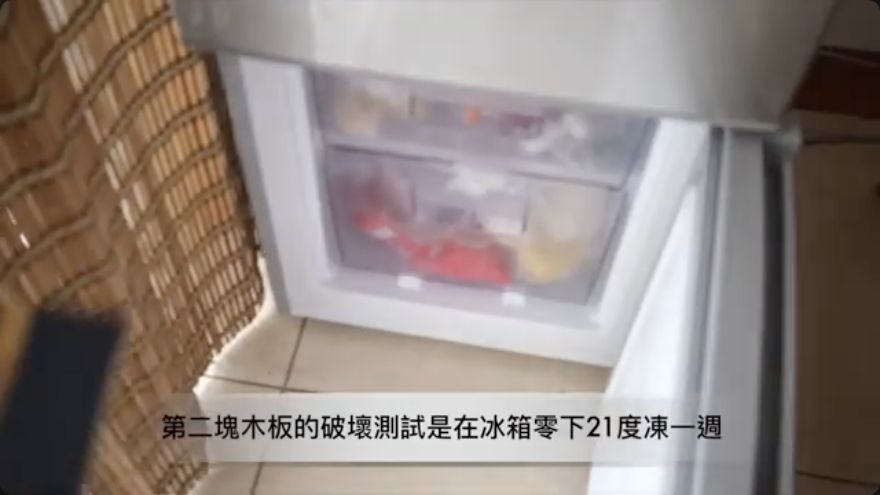
refrigerator— set to -21°C for freezing test
Materials
ki-urushi— raw unrefined lacquer, used as binder
filler powders— 16 types including tile ash, bentonite, talc, gypsum, and atomic filler
oak boards— substrate, no cloth reinforcement (nunokise)
400-grit sandpaper— used for abrasion testing
Conditions
temperature — 20-25°C for atomic filler mixing, -21°C for freezing test
humidity — 40% for atomic filler mixing, 80% for furo curing, below 30% in Kunming
cure time — 24 hours for atomic filler, 1 week for UV, freezing, and water tests
notes — Tests conducted in Kunming with varying humidity levels.
The method
Section by section.
Each heading links back to the moment in the source video where it begins.
Mix 16 different filler powders with ki-urushi at a ratio of 1:0.8 (filler to lacquer). Apply the mixture to oak boards that have been pre-coated with a layer of ki-urushi. The boards lack cloth reinforcement. For atomic filler, add hardener at a 100:1 or 100:2 ratio at 20-25°C and 40% humidity, let sit for 24 hours, then cure in a furo at 80% humidity for 24 hours before testing.
When it is rightUniform application of filler on the wooden substrate.
When it goes wrongPoor adhesion or uneven mixing, particularly noted with medium tile ash due to coarse particles.
Expose one board to natural sunlight in Kunming for one week. The UV intensity reached over 3100 micro-watts per square centimeter. After exposure, observe the color change of the filler blocks.
When it is rightFiller blocks show noticeable lightening in color compared to other test groups.
When it goes wrongUV aging causes visible discoloration in ki-urushi.
Place one board in a refrigerator at -21°C for one week. Upon removal, check for moisture absorption or structural changes. Note that atomic filler absorbed moisture and was not solid after freezing.
When it is rightFiller remains solid and intact after freezing.
When it goes wrongAtomic filler absorbs moisture and fails to solidify properly.
Soak one board in water for one week. By day three, an oily substance may float to the surface. After removal, allow the board to dry in a low-humidity environment (below 30% in Kunming). Observe for cracking in the wood and filler.
When it is rightFiller surface shows no obvious damage despite wood cracking.
When it goes wrongWood cracks into pieces due to rapid humidity change, potentially leading to filler cracking if decoration is present.
Sand the dried filler surface with 400-grit sandpaper for 20 strokes. Evaluate the ease of sanding and hardness of different fillers. Porcelain powder is easier to sand than expected, while talc powders are harder and more resistant to abrasion.
When it is rightEven sanding with consistent pressure.
When it goes wrongHarder fillers like talc resist sanding, while softer ones may abrade too quickly.
Examine the tested filler blocks under a microscope at 500x and 1000x magnification. Look for particle characteristics, voids, and structural integrity. Note that medium tile ash shows glossy coarse particles, while deer antler ash shows distinct pits.
When it is rightClear visualization of particle structure and any voids or defects.
When it goes wrongInability to detect subtle differences without more professional instruments.
Terminology in this video
生漆ki-urushi
raw unrefined lacquer
布着せnunokise
cloth reinforcement over edges
風呂furo
humidity-controlled curing cabinet
Left open
What this video does not settle.
Why atomic filler absorbed moisture and failed to solidify after freezing.
Source of the oily substance observed during water immersion.
Long-term effects of UV exposure on different filler types.