This video demonstrates the final polishing stages of lacquered pens using Japanese powders and alternative pastes. It is useful for lacquer artists who have completed their ground and final coats and need to reveal the gloss. The content focuses on the specific materials, application methods, and judgment criteria for achieving a high-quality finish.
A walkthrough written from Tamenuri Studio’s video ↗.
The recording is the authoritative demonstration; this page is a working guide to it.
Ensure hands are moisturized and clean before hand polishing to prevent skin irritation and surface damage.
Read Safety First before working with raw urushi.
Tools shown
microfiber cloth— Fine, soft, short-hair, used for early polishing stages
bamboo cloth— Alternative to microfiber for applying dozuri paste
fingers/palm— Used for final hand polishing with migakiko and tsunoko
Materials
migakiko powder— Fine Japanese polishing powder, primary material for final gloss
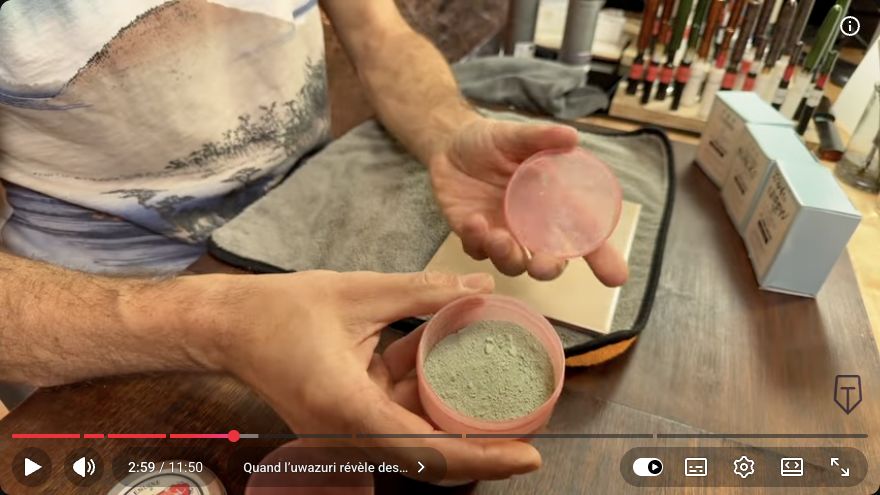
If the surface shows scratches or unevenness after an uwazuri coat, do not proceed. Mix a tiny amount of rapeseed oil with a tiny amount of green or gray dozuri powder to form a paste. Apply this to the pen surface using a bamboo cloth or fine microfiber. Work the paste into the surface to correct defects before applying further lacquer.
When it is rightSurface defects are removed, allowing for a uniform base for the next lacquer coat.
When it goes wrongProceeding with lacquer over visible scratches or unevenness, which will be revealed in the final polish.
For early or middle stages of polishing, apply a tiny bit of rapeseed oil to the pen surface. Add migakiko powder and work it in using a fine microfiber cloth. This stage is used after the first or second uwazuri layers. After polishing, clean the oil residue from the surface before applying the next layer of lacquer.
When it is rightThe surface is smoothed and prepared for the next lacquer application.
When it goes wrongLeaving oil residue on the surface, which can interfere with the adhesion of the next lacquer coat.
For the final stage, ensure the pen is almost finished. Use an absolutely tiny amount of oil, barely enough to moisten the fingers. Apply migakiko powder directly to the surface and polish using the fingers or the soft part of the palm. Ensure hands are clean, soft, and moisturized to avoid scratching the lacquer. This method reveals the highest gloss.
When it is rightA high-gloss, mirror-like finish is achieved without visible scratches.
When it goes wrongUsing dry or rough skin, which can scratch the delicate final lacquer surface.
For the absolute final step, use tsunoko powder after a week of final curing in the furo. Apply the powder to the clean, cured surface and polish by hand. Tsunoko powder not only enhances gloss but also binds and removes uncured traces of urushi, making the surface safe. This step is used only once on fully finished pieces.
When it is rightMaximum gloss and a chemically stable, safe surface.
When it goes wrongApplying tsunoko too early, before the lacquer is fully cured, which may not effectively bind uncured urushi.
Terminology in this video
磨き粉migakiko
Fine Japanese polishing powder
鹿角tsunoko
Deer antler powder used for ultra-fine polishing
砥dozuri
Abrasive polishing stage
上塗uwa-nuri
Final lacquer coat
Left open
What this video does not settle.
Exact quantity of oil and powder for each stage is described as 'tiny' but not quantified.
Specific brand of bamboo cloth is unknown.
The exact grit equivalence of Kiku-mol paste to dozuri powders is not specified.